
REVIEW · REEF SNORKELING
Key Largo: Molasses Reef Snorkeling Trip
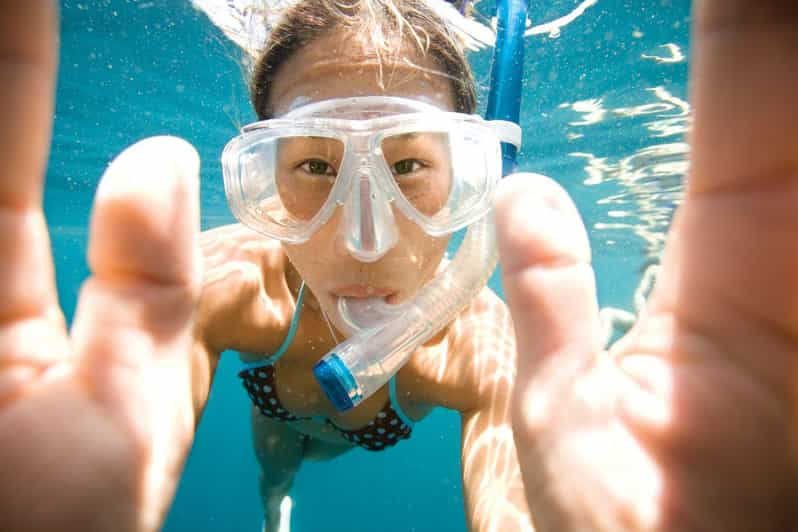
Molasses Reef is one of Key Largo’s best-known underwater sites, with warm water, coral ridges, and the chance to see nurse sharks and eagle rays from the surface. The reef slopes from near the waterline to about 40 feet, but your best views depend on sea conditions, water clarity, and how much shallow coral remains in good shape.
I like the two in-water stops, which give you more than one chance to find fish and settle into the water. I also like that the price includes a mask, fins, snorkel, and vest, so you do not need to pack a full kit. The main catch is that this is a shared snorkel and scuba boat, and several departures have felt more focused on the scuba groups than on the snorkelers.
Key points to know
- Two reef stops: You get separate chances to explore Molasses Reef during the four-hour outing.
- Shared boat: Snorkelers ride with scuba customers, which can affect the pace and attention from the crew.
- Spur-and-groove reef: Coral ridges and channels run from near the surface down to roughly 40 feet.
- Possible wildlife: Look for tropical fish, barracudas, southern stingrays, eagle rays, nurse sharks, and perhaps a sea turtle.
- Included equipment: Mask, fins, snorkel, and snorkel vest are supplied, along with a partly shaded area on the boat.
- Best for capable swimmers: You must know how to swim, and open-water conditions may include waves and current.
What Molasses Reef looks like from the surface
Molasses Reef is not one single shallow pool. It is a broad reef system built around parallel coral ridges and sandy channels, a pattern often called spur and groove. Some coral formations begin close to the surface, while other sections slope to about 40 feet.
That shape matters to you as a snorkeler. You can stay near the surface and still see the upper reef, but the most dramatic formations may be below comfortable snorkeling depth. From above, you will look down into channels and along coral edges rather than swim through a fully enclosed coral garden.
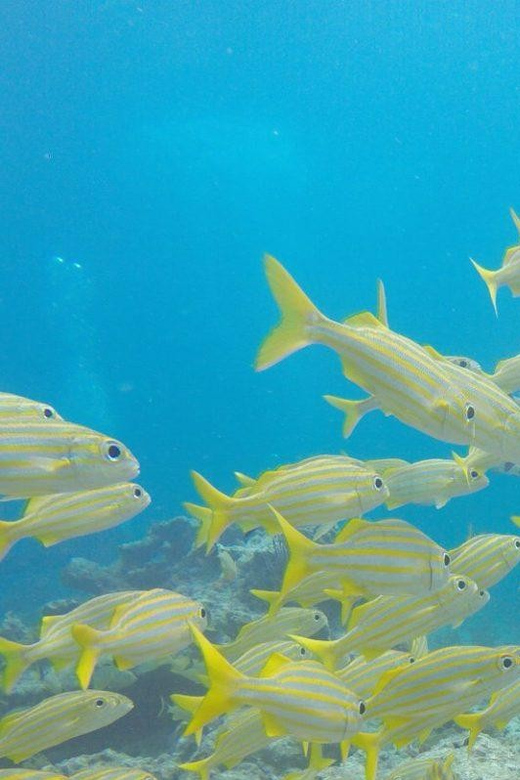
The reef can offer colorful coral, schools of small tropical fish, barracudas, southern stingrays, eagle rays, and nurse sharks. A sea turtle has also been spotted on a recent outing. Wildlife is never guaranteed, and the number of fish can vary sharply from one day to the next.
I would set your expectations at a pleasant reef outing with possible standout sightings, not a promise of hundreds of fish at every turn. Some passengers have found the reef sparse, especially from the surface. That is a fair warning for anyone picturing a crowded aquarium.
More Reef Snorkeling in the USA
- Half Day Snorkel Trip on Reefs in the Florida Keys
★ 5.0 · 1,699 reviews - Key Largo Two Reef Snorkel Tour – All Snorkel Equipment Included!
★ 5.0 · 1,520 reviews - Kona Snorkel Tour: Captain Cook Reef Snorkel, Dolphin & Sea Caves
★ 4.5 · 1,411 reviews
Check-in at the Wyland Building
You meet inside the iconic Wyland Building in Key Largo, recognizable by the large marine mural painted around its exterior. It is a useful landmark, especially if you are unfamiliar with the area.
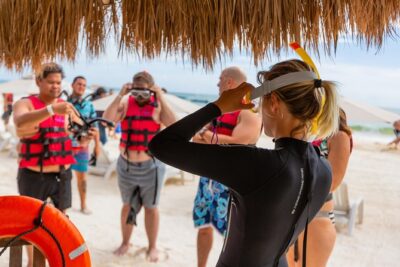
The start involves a quick check-in before you board the boat. The crew supplies your mask, fins, snorkel, and flotation vest, then gives a basic briefing on what to expect and how to stay safe in the water.
That briefing is important because this is not a calm swimming-pool session. You are in open sea, and conditions can include waves and current. You need to know how to swim before booking, and you should be comfortable keeping yourself near the boat if the water becomes rough.
No individual guide names are provided for this experience, so you should not expect a named naturalist-led tour. The crew handles the practical side of the trip, including equipment and safety instructions, while you explore the reef on your own in the designated area.
A four-hour boat trip shared with scuba groups
The total outing lasts about four hours and includes two stops on the reef. The boat has a partly shaded section, a welcome feature in the Florida sun. You will spend part of the time getting to the reef, preparing for the water, and returning between stops.
The boat carries both snorkelers and scuba customers. That arrangement can work well if you are happy with a mixed group and do not need constant instruction. It can also affect your experience. Scuba customers may need time to organize tanks and equipment, and the boat’s schedule may be built around their underwater plans.
This is the biggest practical point to understand before you pay. On one reported departure, the boat left roughly an hour later than expected while the scuba group prepared. Another snorkeler felt unsure about boarding and had to ask what to do. Those problems may not occur every time, but they show why this trip is not the best fit if you want a tightly managed snorkel-only schedule.
I would arrive ready to ask direct questions at check-in: Where should snorkelers sit? When will we enter the water? How long is each stop? What should we do if the current carries us away from the boat? Clear answers can make the day much easier.
What the first reef stop is like
When the boat reaches the reef, the crew selects an area that fits the sea conditions. You enter warm water and begin by getting comfortable with your mask and fins near the boat.
The first stop is your chance to learn how the visibility, current, and reef look that day. Start slowly. Check the seal of your mask, make sure your vest is adjusted, and spend a moment looking down before swimming farther from the boat.
At its best, Molasses Reef gives you a layered view. Small fish may move over the coral, while stingrays or larger animals could appear along the sandy channels. Nurse sharks tend to be a special sighting, but you should treat any large marine animal with space and calm behavior.
The reef’s spur-and-groove layout gives you natural lines to follow. Swim along a coral ridge, look into the sandy groove beside it, then turn back before you get too far from the boat. Strong current can make the return harder than the outward swim, so conserve energy.
Some snorkelers have found themselves staying close to the boat because of waves and current. That is not necessarily a failure of the trip. It is simply the reality of an exposed reef site. You may have clear water and still need to keep your range modest.
Same water, a different way to get in it:
- Oahu: Grand Tour Around Island 16 Locations plus Snorkeling
★ 5.0 · 8,669 reviews - Big Island Manta Ray Night Snorkel
★ 5.0 · 5,656 reviews - Oahu’s Ultimate Tour: Dole, Turtle Snorkel, Pali Lookout & More
★ 4.5 · 5,461 reviews - Oahu Circle Island Tour with Turtle Snorkeling— Small-Groups
★ 5.0 · 5,214 reviews
The second stop gives you another chance
The second reef stop is valuable because conditions can change even within the same outing. A different section may offer better visibility, calmer water, or a better chance of spotting fish.
The captain may choose an alternate location on the reef if sea conditions call for it. That flexibility is sensible from a safety point of view, but it means you cannot count on a specific patch of coral or a particular animal.
The two sites may also feel similar. On one trip, the stops were close together and appeared to show much of the same reef. If you want two radically different underwater settings, this may disappoint you. If you see little during the first swim, though, a second entry still gives you another opportunity.
Use the second stop to look in places you skipped earlier. Scan the edges of the coral, check the sandy bottom, and watch the water above the reef for rays. Nurse sharks and eagle rays are among the animals you might see, but there is no reliable wildlife schedule.
Equipment and comfort on board
The basic snorkeling kit is included: mask, fins, snorkel, and a snorkel vest. That keeps the $75 price easier to justify, especially if you do not own equipment or are flying into Florida with limited luggage.
The vest is useful even for strong swimmers. It lets you rest at the surface and spend more energy watching the reef instead of constantly working to stay up. You should still know how to swim, since the vest is not a substitute for swimming ability or open-water comfort.
A partly shaded boat area provides some relief from direct sun. You will still want sun protection, water, and a cover-up, though these are not listed as included. Keep your expectations simple: this is a working snorkel boat shared with scuba customers, not a private sightseeing yacht.
The most praised practical feature is the boat itself, which has been described as comfortable and well equipped. At the same time, comfort does not guarantee a snorkel-centered service style. The crew may be busy with scuba preparation, so speak up if you need help with gear or instructions.
Wildlife: what you might see
The animal list is strong for a Florida reef trip. Tropical fish are the most likely general attraction, with barracudas, southern stingrays, eagle rays, and nurse sharks possible highlights.
A turtle has also been seen during a recent trip, but I would treat that as luck rather than part of the standard program. You should not book this outing solely for one animal.
The quality of the coral and fish life can vary. Some days may offer good color and movement, while other visits may seem quiet from the surface. Reports of sparse coral and fewer fish are worth taking seriously, especially if your main goal is a dense, shallow coral garden.
The reef is still worthwhile for the chance to observe a natural marine site rather than a controlled attraction. You get warm Florida water, open-sea conditions, and a real reef system. That also means nature sets the schedule.
Is $75 a fair price?
At $75 per person, this is a moderate-cost half-day activity in Key Largo. The price includes the boat, two reef stops, standard snorkeling equipment, and a vest. For someone without personal gear, those inclusions add real value.
The price feels strongest when the sea is calm, visibility is good, and you see a useful mix of coral and fish. It feels weaker if the boat runs late, the current keeps you close to the vessel, or the reef appears quiet.
I would compare this trip by the kind of day you want. If you want an affordable way to reach Molasses Reef and are comfortable sharing space with scuba customers, the cost is reasonable. If you want a snorkel-only outing with close crew attention and a relaxed timetable, spend time checking for a dedicated snorkel boat instead.
The flexible cancellation policy also reduces some booking risk. You can cancel up to 24 hours before departure for a full refund, and you can reserve now and pay later. Those terms are useful when Florida weather may affect your plans.
Who should book this trip?
I think this outing suits confident swimmers who want a straightforward reef trip and do not mind some independence in the water. It is also a good match for visitors who want to try snorkeling without buying or packing equipment.
You may enjoy it if you are interested in the whole setting: the boat ride, warm sea, coral formations, and possibility of larger animals. You should be comfortable accepting that the reef may be quiet and that the captain can change locations.
This is not a good choice for non-swimmers, people with low fitness, or anyone prone to serious seasickness or motion sickness. It is also not suitable for children under six, wheelchair users, people with mobility limits, or people with heart, respiratory, or seizure conditions. Recent surgery is another stated reason not to participate.
The water can be warm and inviting, but open sea is still demanding. If you are unsure about your swimming ability, choose a calmer, supervised water activity instead.
Practical tips for a better outing
Arrive at the Wyland Building with enough time to check in without rushing. At the boat, identify yourself as a snorkeler and ask when your group will enter the water.
Bring sun protection and a way to cover up between stops. Use the shaded section when you can, and save energy for the second reef stop rather than swimming hard during the first few minutes.
If you wear prescription glasses, ask about mask options before departure. The provided gear includes the basic mask, fins, and snorkel, but no special prescription equipment is listed.
Keep close enough to the boat to return comfortably. Current can make a short outward swim feel much longer on the way back. Look around you instead of only searching for big animals, since small fish and coral details may provide the best viewing.
Finally, plan for flexibility. The captain may select another reef section, and the timing can be affected by the scuba group. That is part of the bargain of a shared boat.
Should you book Molasses Reef Snorkeling Trip?
Book it if you want a reasonably priced, four-hour trip to a famous Key Largo reef, already know how to swim, and are happy with a mixed snorkel and scuba boat. The included equipment, two water stops, comfortable boat, and chance of seeing rays or nurse sharks give it genuine appeal.
Think twice if you expect a quiet snorkel-only experience, close personal guidance, or thick coral and fish at every moment. The best choice depends on your priorities: for a flexible reef outing, it can work well; for a highly polished snorkeling service, look for a boat built around snorkelers first.
FAQ
How long does the Molasses Reef snorkeling trip last?
The trip lasts approximately four hours, including the boat journey and two in-water reef stops.
How many snorkeling stops are included?
You get two stops for in-water exploration at Molasses Reef or another reef location selected by the captain according to sea conditions.
Is snorkeling equipment included?
Yes. The trip includes a mask, fins, snorkel, and snorkel vest.
Is the boat shared with scuba customers?
Yes. Snorkelers and scuba customers use the same boat.
Where is the meeting point?
Meet inside the Wyland Building in Key Largo, a tall structure covered by a marine mural.
Do I need to know how to swim?
Yes. All participants must know how to swim.
Can children under six join the trip?
No. Children under six are not suitable for this activity.
Can I cancel for a full refund?
Yes. You can cancel up to 24 hours in advance for a full refund. You can also reserve now and pay later.
Just added around the USA
- Boca Raton Premium Jet Ski Tour – Optional Snorkeling/Lighthouse★ 5.0 · 9 reviews
- Ultimate Ocean Encounters Midday Snorkel★ 4.5 · 43 reviews
- Two Tank Morning Reef Dive and Snorkel★ 5.0 · 54 reviews
- Waikoloa Catamaran Snorkel Sail Including Lunch★ 4.5 · 105 reviews
- 2-Hour Dolphin Watching and Double Reef with Snorkel in Hawaii★ 5.0 · 23 reviews
- Kona Luxury Catamaran Yacht Snorkel & Sail★ 5.0 · 40 reviews
- Manta Ray Night Snorkel Tour in Kailua-Kona, Big Island★ 5.0 · 382 reviews
- Sunset Cruise & Manta Night Snorkeling Charter★ 5.0 · 16 reviews
Reef Snorkeling, compared.
Viator Exclusive: Tulum Ruins, Reef Snorkeling, Cenote and Caves
Read our review →
Great Barrier Reef Snorkeling and Diving Cruise from Cairns
Read our review →
Reef Snorkeling & Jungle Speedboat Adventure with Mayan Ceremony
Read our review →
Ocean Freedom Great Barrier Reef Luxury Snorkel and Dive Cruise
Read our review →
Reef Snorkeling in National Park from Cancun with Beachside Lunch
Read our review →
Half Day Snorkel Trip on Reefs in the Florida Keys
Read our review →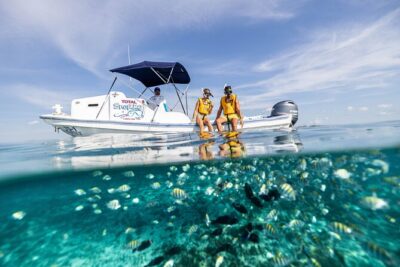
5-in-1 Cancun Snorkeling: Turtles, Reef, Musa, Shipwreck, Cenote
Read our review →
Premium Snorkelling and Diving Reef Day Trip
Read our review →Lists this trip appears in