
REVIEW · COSTA RICA SNORKELING TOURS
Half-Day Snorkeling Experience in Tamarindo
Catalina’s Archipelago is the main attraction here, with two guided snorkeling sessions in open Pacific water and a real chance of seeing more than reef fish. Manta rays, dolphins, turtles, eels, octopuses, and even whales have all appeared on good days.
I like the careful, personal guidance, especially from guides such as Lily and Clara, and I like that the crew takes snorkeling seriously rather than treating it as a quick add-on to a party boat. The boat ride itself can be rewarding, too. My main caution is the sea: wind and swell can make this a rough morning, with poor visibility or even an uncomfortable ride for people prone to seasickness.
Quick take: what matters most
- Two guided sessions near Catalina’s Archipelago: You get meaningful time in the water, not just a quick look over the side of the boat.
- Wildlife can be impressive: Fish, rays, dolphins, turtles, eels, octopuses, flying fish, and migrating whales are all possible, though nature sets the schedule.
- A mixed boat: Snorkelers share the 36-foot catamaran with scuba guests, so this is not always a snorkeling-only outing.
- Early departure: Meet at Tamarindo Diving Center at 6:40 am and return around noon.
- Sea conditions matter: January and February can bring stronger wind, choppy water, and reduced visibility.
- Good support for beginners: Guides provide equipment, stay with the group, and can help less confident swimmers in the water.
An early start from Tamarindo
Your morning begins at 6:40 am at Tamarindo Diving Center, about 200 meters east of El Chiringuito on Calle Cruz. The early start is practical rather than glamorous, but it gives you a better chance of reaching the islands before conditions worsen later in the day.
You first try on your mask, fins, and snorkel at the center. This simple fitting session matters. A leaking mask or badly adjusted fins can spoil an otherwise good morning, so use this moment to ask for a different size or help with the fit.
From the center, the crew takes you to the beach. A small boat carries you from shore to the larger vessel, which avoids the need to walk out through the surf with all your equipment. At the end of the morning, you return to the same meeting point.
The group is limited to a maximum of 15 people, although the boat may carry both snorkelers and scuba guests. Several outings had a fairly even split, while others had many more scuba guests than snorkelers. That does not mean you are ignored, but it does mean the character of the trip can change from one date to another.
More Half-Day Trips in the world:
- Half-Day Sea Turtle and Cenote Snorkeling Tour from Cancun & Riviera Maya
★ 5.0 · 2,039 reviews - From Phi Phi: Half-Day Longtail Boat Tour with Snorkeling
★ 4.2 · 1,733 reviews - Half-Day Trip from Key West with Kayaking, Snorkeling & Sunset
★ 5.0 · 1,683 reviews
The 45-minute ride to Catalina’s Archipelago
Once you board the larger boat, expect about 45 minutes of navigation to the Catalina Islands. This is not wasted time. The Pacific views open up, and you may spot dolphins, turtles, flying fish, seabirds, or migrating humpback whales along the way.
Bring binoculars if you have them, though they are not required. Keep your phone secure if you sit near the front with your legs over the edge. The spray and motion make a waterproof case or a strap a sensible idea.
The boat has shade, according to the practical details shared by past participants, and the crew provides water and snacks. The snacks are useful after swimming, but lunch is not included. Since the trip returns around noon, you can eat afterward in Tamarindo rather than carrying a full meal on the boat.
The crossing can be smooth, but it can also be rough. Some people who rarely feel seasick have become queasy after the first snorkeling session, when the boat’s motion continues beneath them. If you know you are sensitive to motion, speak with a medical professional about suitable medication before the morning begins.
Two snorkeling sessions in open Pacific water
The main program is two snorkeling sessions, each with a guide in the water. Catalina’s Archipelago is the usual destination. If the wind is too strong, the crew may use Cabo Velas instead.
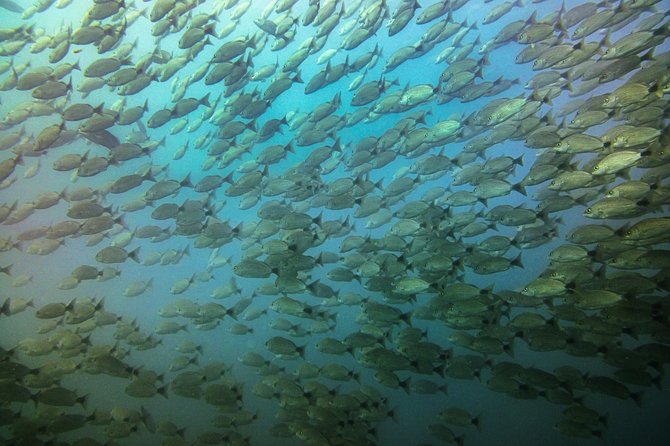
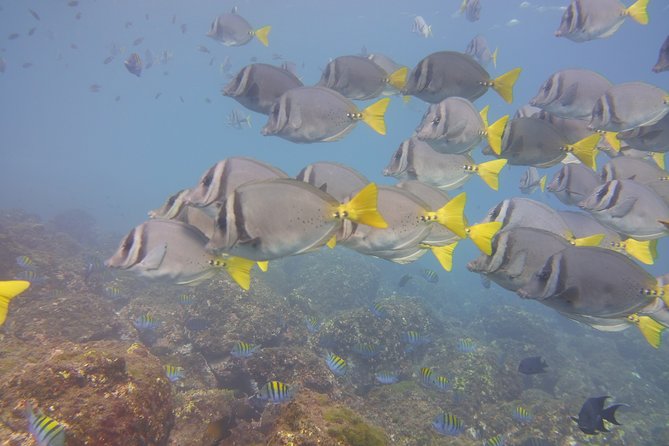
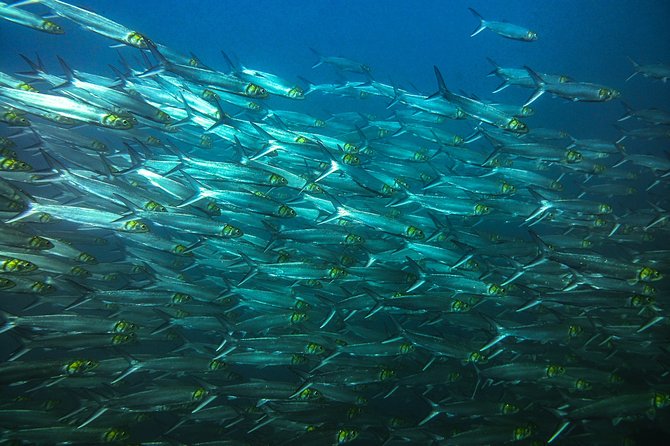
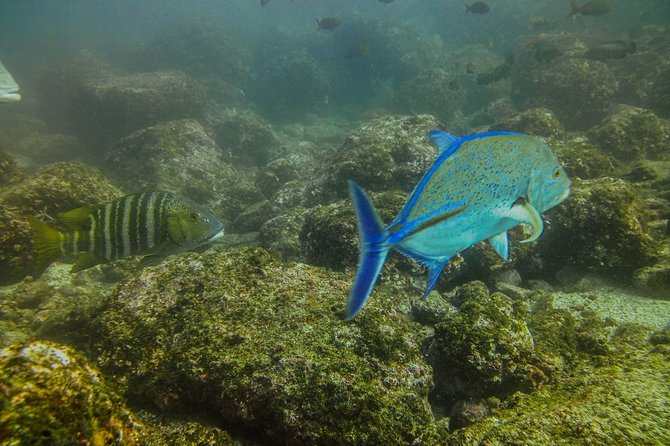
That alternate plan is important because conditions control the quality of the experience. On calm days, you may see schools of colorful fish, puffer fish, eels, stingrays, eagle rays, and white-tipped reef sharks. Some outings have also produced sightings of manta rays, octopuses, turtles, dolphins, and whales from the boat.
You should set your expectations correctly. This is wild-animal viewing, not an aquarium visit. A guide may work hard to find marine life, but no one can promise a manta ray or a clear view. Plankton can make the water cloudy, and rough conditions can reduce visibility even when the area is full of fish.
The guides are the strongest part of the water time. Lily, also spelled Lili in some details, is repeatedly singled out for helping nervous beginners, pointing out unusual animals, and keeping the group together. Clara is also noted for responding well to different swimming abilities and offering extra help when someone needed to return to the boat.
If you are not a strong swimmer, tell the guide early. Pool noodles are available to help you float, and the crew can assist you back to the boat. The trip still requires a moderate level of fitness, since you will be boarding boats, swimming in open water, and dealing with waves.
What the mixed boat means for snorkelers
This is a snorkeling experience run by a full marine outfit, not a small, dedicated snorkel charter every morning. The same boat carries scuba guests, and the crew divides people into appropriate groups for the water sessions.
That arrangement has advantages. The catamaran is described as a 36-foot vessel with two engines, and the boat has shade. You also get a crew used to managing people with different abilities, which can be reassuring if you are new to snorkeling.
The trade-off is focus. On some mornings, snorkelers make up only a quarter of the group. One guide still accompanies the snorkeling group, but the overall schedule is shared with the scuba program. If your priority is a private or snorkeling-only outing, this is worth considering before you book.
For most people, the mixed format should not be a deal-breaker. Snorkelers can spend substantial time in the water, and some outings have had about eight snorkelers with a dedicated guide. Just understand that the boat’s main operation serves both activities.
A few more days in the water around the world worth a look
- San Juan Guided Snorkel With Turtles Tour and Videos
★ 5.0 · 12,947 reviews - Oahu: Grand Tour Around Island 16 Locations plus Snorkeling
★ 5.0 · 8,669 reviews - Tenerife: Kayak and Snorkel with Turtles, Wetsuits Included
★ 4.6 · 7,215 reviews - ️Nusa Penida by Private Boat – Snorkeling 4 spots, Swim with Mantas + Land Tour
★ 5.0 · 6,424 reviews
Sea conditions, seasickness, and visibility
This is the most important practical issue. The water off Guanacaste can be choppy, particularly in January and February when winds are often stronger. Large swells can make the boat ride bumpy and can turn the second snorkeling location into hard work.
Several outings went well despite rough water, with people seeing plenty of fish and rays. Other mornings were unpleasant, with poor visibility, vomiting, or a second location too rough for comfortable snorkeling. Both outcomes are possible on the same route at different times of year.
You can reduce the risk, but you cannot remove it. Consider taking motion-sickness medication before departure if it is appropriate for you. Keep your head movements controlled in the water, take breaks to look at the horizon, and do not force yourself to continue if you feel sick.
A pool noodle can help you float, but some people find it more comfortable to hold it in front rather than place it under the arms. Tell the guide immediately if you feel unwell. The crew has helped people back to the boat with a floating ring, and guides remain close to the group.
If the weather is poor, the operator may cancel the outing and offer another date or a full refund. That policy protects you from being sent out in unsafe conditions, but it does not guarantee that every rough day will be canceled. A trip can operate in conditions that one person finds exciting and another finds miserable.
What the guides do well
The guide’s role is more than pointing toward fish. A good guide helps with mask problems, keeps less confident swimmers nearby, sets a manageable pace, and identifies small creatures you might otherwise miss.
Lily has been especially useful for first-time snorkelers and children who struggle with their masks. She is described as patient, warm, and attentive in the water. Clara has also helped families with different swimming abilities and made sure people knew they could return to the boat when needed.
The crew provides the snorkeling equipment, including masks, snorkels, and fins. Gear was generally described as well maintained, though any shared equipment can fit one person better than another. Do not quietly tolerate a leaking mask. Ask for help before you enter the water.
Children must be accompanied by an adult, and the minimum age is eight. The maximum listed age is 80, but age alone does not determine suitability. Your comfort with open water, boat motion, and moderate physical effort matters more.
Snacks, equipment, and what to bring
The $95 price includes the boat trip, professional guide, snorkeling equipment, water, and snacks. Coffee has also been available at the shop before departure. The snacks are a welcome touch after the first session, especially since there is no lunch included.
Bring a towel, sunscreen, a hat, and a jacket. The jacket is useful during the early boat ride, when wind can make the morning feel cool even in a warm climate. Apply sunscreen before leaving and use reef-conscious habits where possible, while following the crew’s instructions.
A secure waterproof phone case is useful on the crossing. You may sit at the front of the boat for a better view, but your phone should be attached or stored safely. Binoculars are helpful for spotting whales and distant wildlife, though you can enjoy the ride without them.
The tour returns around noon. Plan your afternoon loosely, since sea conditions and the pace of the morning can affect the exact timing. You finish back at the Tamarindo Diving Center rather than at a separate beach location.
Is $95 a fair price?
At $95 per person, this is a reasonable price if you want transportation to Catalina’s Archipelago, two guided water sessions, equipment, snacks, and a small-group cap. Reaching the islands independently is not a practical option for most visitors, and the guide support has real value for beginners.
The value depends heavily on the conditions. On a clear morning with calm water, the combination of boat scenery, two water sessions, and larger marine life can make the price feel very fair. On a rough day with cloudy water, you may spend much of the morning managing waves rather than enjoying clear views.
I would not book this solely for a guaranteed whale, manta ray, or shark sighting. Book it for the chance to explore a productive Pacific area with a crew that knows how to support snorkelers. That distinction will help you enjoy the outing even if the biggest animals stay out of sight.
The free cancellation policy allows you to cancel at least 24 hours before the start time for a full refund. Changes made within 24 hours are not accepted, and a poor-weather cancellation may lead to another date or a full refund. Since this activity is weather-dependent, keeping one flexible morning in your schedule is wise.
Who should book this morning
I would recommend this trip to confident swimmers, families with older children, couples, solo visitors, and first-time snorkelers who are comfortable with open water and willing to accept changing conditions. The crew’s patient help makes it accessible to different ability levels, and the 15-person maximum keeps the group from becoming enormous.
It suits you especially well if you want a serious morning on the ocean rather than a party cruise. There is no focus on alcohol or entertainment. The point is the boat ride, the marine life, and time in the water.
I would be cautious if you are highly prone to seasickness, dislike bumpy rides, or need guaranteed clear visibility. You may still enjoy it, but you should understand that rough water can affect both the crossing and the snorkeling itself.
Should you book the Catalina snorkeling trip?
Book it if you want two proper snorkeling sessions, good guide support, and a chance to see unusually large Pacific wildlife. The strongest reasons are the guides, the quality of the possible sightings, and the fact that snorkeling receives real attention even when scuba guests share the boat.
Think twice if you need calm, shallow water or a private snorkel boat. This is an open-ocean outing, and January and February can be especially windy. Bring motion-sickness precautions, accept that visibility changes, and leave room in your expectations for nature to be unpredictable.
For $95, I consider it a worthwhile Tamarindo excursion for the right sea conditions and the right kind of swimmer. Just make the weather and boat motion part of your decision, not an afterthought.
FAQ
Where does the snorkeling experience begin?
It begins at Tamarindo Diving Center, located 200 meters east of El Chiringuito on Calle Cruz in Tamarindo, Guanacaste.
What time should I arrive?
The stated start time is 6:40 am.
How long does the experience last?
The outing lasts approximately five hours and usually returns to the meeting point around noon.
Where does the snorkeling take place?
The usual destination is Catalina’s Archipelago. If conditions are too windy, the boat may go to Cabo Velas instead.
How many snorkeling sessions are included?
You receive two snorkeling sessions, each accompanied by a snorkeling guide.
Are snorkeling equipment and food included?
Snorkeling equipment, water, and snacks are included. Lunch is not included.
What should I bring?
Bring a towel, sunscreen, a hat, and a jacket. Binoculars and a secure waterproof phone case may also be useful for the boat ride, but they are not listed as included items.
Is there an age or fitness requirement?
The minimum age is eight and the maximum listed age is 80. Children must be accompanied by an adult, and you should have a moderate level of physical fitness.
Just added around the world
- Cagliari Boat Tour with Sardatrips; Swim, Snorkeling, Sip & Snack★ 5.0 · 106 reviews
- Boat Tour in Cagliari Saddle of the Devil Stops Swimming Snorkeling★ 5.0 · 28 reviews
- Boat Tour to Sella del Diavolo: Snorkeling, GoPro & Beer★ 4.5 · 33 reviews
- Snorkel Privately in Cabo San Lucas★ 5.0 · 203 reviews
- Cagliari 3 Hours Luxury Motorboat Tour – Wine and Snorkeling★ 5.0 · 118 reviews
- Snorkeling and whale watching Tour in Cabo★ 5.0 · 9 reviews
- Private Yacht Cruise 4 Hour- Snorkeling & Paddle Boarding★ 5.0 · 74 reviews
- Snorkel and arch tour in los cabos★ 5.0 · 178 reviews
Costa Rica Snorkeling Tours, compared.
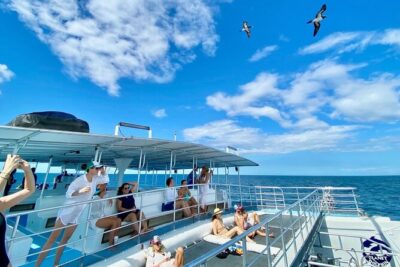
Flamingo Family Fun Catamaran Snorkel:Comfortable shaded seating
Read our review →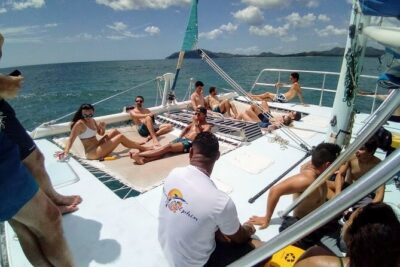
Blue Dolphin Catamaran Snorkeling Sunset Cruise from Tamarindo
Read our review →Dolphin and Snorkeling Trip with Costa Rican Companies
Read our review →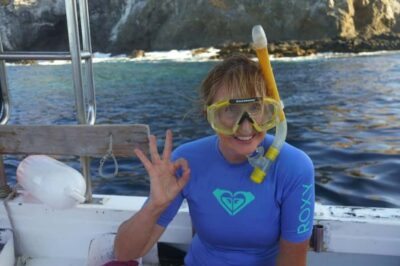
Tamarindo: Guided Snorkeling Tour with Marine Life Spotting
Read our review →Lists this trip appears in