
REVIEW · WHALE SHARK AND MANTA RAY SNORKELING
Small Group, Kona Manta Ray Snorkel Adventure!
The main event is wonderfully simple: you float at the surface in Kona’s dark ocean, holding a lit board while plankton gathers below. Manta rays then sweep in close, sometimes passing within arm’s reach as they feed. I like the small 13-person limit and the quick five-minute ride to the viewing site. You spend less time commuting and more time watching wildlife.
I also like the crew setup, with a captain, lifeguard, and in-water guide at the site. Past trips have featured guides such as Chase, Ryan, Kelly, Landon, Spinner, and Tia, though crew assignments can change. The main consideration is that you need basic swimming and prior snorkeling skills, and you must climb the boat ladder without assistance.
Key points to know
- Manta rays feed at the light board: Plankton gathers around the underwater lights, drawing manta rays close to the surface.
- Only 13 people per boat: The small group gives you more room around the viewing board than large 20 to 50-person boats.
- Five-minute ride to the site: Most of your roughly one-hour outing is spent at the manta viewing area.
- Expect 20 to 40 minutes in the water: You hold the board while floating on the surface, with a guide and lifeguard nearby.
- Manta sightings are not guaranteed: These are wild animals, and weather or animal behavior can change the night.
- Basic swimming ability is required: You need prior snorkeling experience and must manage the boat ladder independently.
Why the Kona manta snorkel is special
Kona’s night manta snorkel is not a standard reef tour. You are not searching for fish in bright shallow water. Instead, you watch large wild manta rays gather around a floating light board after sunset, feeding on plankton attracted by the lights.
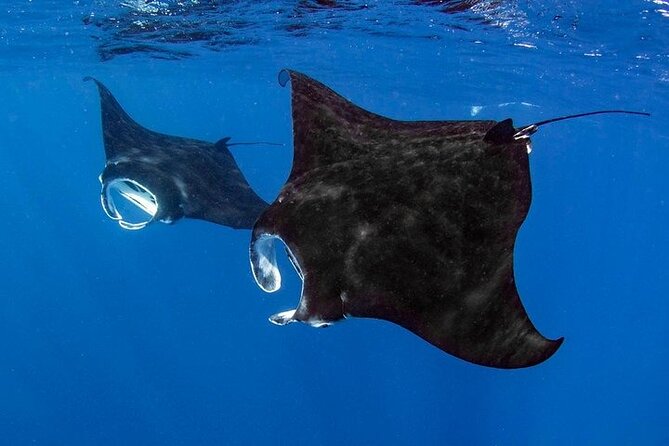
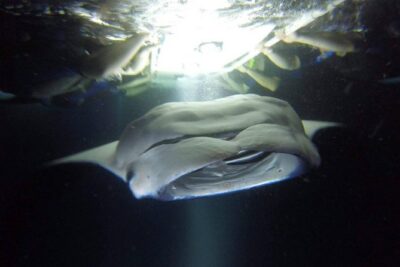
The sight can be startlingly close. The rays glide beneath the board with their wide mouths open, then roll and turn away before returning for another pass. Several people on past departures saw three or four manta rays together. Others saw roughly six, including one with a wingspan of about 13 feet, or a dozen circling beneath the board.
That range matters. You may get a busy night with several rays, or a quieter encounter with only one or two. The crew cannot control the animals, so this is wildlife watching rather than a guaranteed show.
I like the fact that the experience does not require a long boat journey. The ride to the viewing site takes about five minutes. That keeps the outing focused, though the ride itself can feel lively on the small boat. Some departures have featured a fast, bumpy ride with music and a playful mood, while calmer conditions may make the trip more relaxed.
More Whale Shark and Manta Ray Snorkeling in Big Island:
- Big Island Manta Ray Night Snorkel
★ 5.0 · 5,656 reviews - Big Island: Kona Manta Ray Snorkel Tour in Keauhou Harbor
★ 4.5 · 2,465 reviews - KONA Manta Ray Night Snorkel – FREE re-ride if no Sightings
★ 5.0 · 2,212 reviews
Meeting in Kailua-Kona and getting ready
You meet at 78-7100 Kaleiopapa Street in Kailua-Kona. Free parking is available along the road, and the meeting point is near public transportation.
Give yourself enough time to find the pickup point and get organized. One past departure had a short delay while the group waited for the vehicle, so a text update was useful. That sort of delay is not unusual for an ocean activity, but it is worth keeping in mind if you are planning dinner or another booking immediately afterward.
Before boarding, you receive safety instructions and equipment. The tour requires you to understand verbal directions in English, so this is not a good fit if you cannot follow an English safety briefing.
The outing is designed for a maximum of 13 people. That is one of its biggest advantages. Large manta boats can carry 20 to 50 people, which means more bodies competing for space around the viewing area. A 13-person boat gives the crew a better chance to notice who needs help and gives you a less crowded position at the board.
There is one important physical catch. You must have basic swimming skills, prior snorkeling experience, and the ability to climb the boat ladder independently. If you are nervous in open water, say so before entering. Life jackets are available if requested through the reservation line, but you should not treat this as a learn-to-snorkel outing.
The five-minute boat ride to the viewing site
The boat ride is short, but it can be part of the fun. Several departures used a fast boat, and the ride out and back was described as bumpy and energetic. Music and song requests have been part of some outings, especially with children and teenagers.
That style will suit you if you enjoy a lively ride and do not mind spray or motion. It may not suit you if you want a quiet, gentle cruise. Take motion sickness seriously. One person who usually feels fine on the ocean became seasick, while another passenger was sick enough to miss much of the experience. If you are prone to motion sickness, ask your doctor or pharmacist about an appropriate remedy before the trip.
Once you arrive, the crew positions the light board and underwater lights. The captain, lifeguard, and in-water guide remain at the viewing site. The crew explains how to hold on, where to position yourself, and how to watch the rays without interfering with them.
The short ride has another advantage: if the ocean is unsettled, you are not committed to a long crossing. The water at the site can still be choppy, of course, and weather may cause the entire outing to be canceled. Poor-weather cancellations come with the choice of another date or a full refund.
Holding the light board while manta rays feed
The viewing method is easy to understand. You float on the surface and hold onto a custom light board for up to about 30 minutes. The board’s lights attract plankton, and manta rays arrive to feed on the concentrated food below you.
You do not chase the rays. You stay in place and let them come to you. The crew provides underwater lights and watches the group while the animals pass beneath the board.
Expect around 20 to 40 minutes of snorkeling time, although some past outings lasted closer to an hour in the water. Conditions and animal behavior affect the exact timing. The practical point is that you are not spending the whole tour rushing in and out. The crew may wait when rays are slow to appear, rather than ending the session immediately.
This is also why a light board matters. It creates one main viewing area instead of sending each person in a different direction. You can look down through the dark water and see the rays circle beneath the group. Their movements can feel almost choreographed, but they are wild animals feeding naturally.
You should expect close passes, not contact. Do not reach for a manta ray or try to block its path. The best encounter is the one where you hold your position and watch the ray choose how close to come.
The water may feel chilly, even in Hawaii. Wetsuits are available as part of the equipment options, and some people found one useful. Confirm your equipment needs before boarding, especially if you know you get cold while floating in the water.
A few more days in the water around Big Island worth a look
- Big Island: Captain Cook Snorkel On A Power Catamaran With Lunch
★ 5.0 · 2,232 reviews - Manta Ray Night Snorkel at Kona, Big Island
★ 5.0 · 1,758 reviews - Kona Snorkel Tour: Captain Cook Reef Snorkel, Dolphin & Sea Caves
★ 4.5 · 1,411 reviews - Glow of the Deep: Night Snorkeling with Manta Rays
★ 4.5 · 1,254 reviews
What the small group changes
The 13-person limit is more than a marketing detail. It affects the whole rhythm of the outing.
You have fewer people around the board, less crowding when a manta ray passes, and more chance to ask a question. A small group also lets the crew see how each person is managing in the water. For children and nervous snorkelers, that personal attention can make the difference between enjoying the session and wanting to return to the boat.
The boat is not private at this price. If you book as a family or group of friends, other people may join you. Still, a group of 13 feels far more manageable than a boat carrying 20 to 50 people.
A small boat can also feel more exposed. You may notice the motion more, and there is less room to spread out. One past complaint involved people feeling squeezed together at the board, especially when a less confident swimmer struggled to keep position. That is a fair concern. The board is shared, and personal space can be limited when everyone wants the best view.
The crew’s attitude matters here. Many departures had friendly, playful guides who explained the rays and helped nervous children. One particularly negative experience involved complaints about sparse instructions, poor assistance with the ladder, unavailable fins, and an uncomfortable arrangement at the board. That account is a useful warning: the quality of the evening depends heavily on the crew assigned and on how clearly equipment and procedures are handled.
Equipment, swimming ability, and comfort
Basic snorkeling experience is required. You should be able to float, use a mask and snorkel, follow instructions, and climb the ladder without someone lifting you from the water.
Prescription masks are not available. If you need corrective lenses, plan around that limitation. Equipment details can vary by departure, so ask about masks, fins, and wetsuits when booking rather than assuming every item will be provided in the same way.
The supplied information specifically confirms a custom light board, underwater lights, and a professional in-water crew. Other equipment options have been available on some departures, including wetsuits and visual-acuity masks, but you should confirm what is included for your date.
Wear a swimsuit under your clothes and bring a towel for after the outing. Keep valuables to a minimum. One past participant was uncomfortable with bags and towels left in an unsecured area, so it is sensible to ask where personal belongings will be stored before you board.
If you are an older adult, have limited leg strength, or are unsure about the ladder, contact the operator before booking. The ladder is a real requirement, not a minor formality. A life jacket can be requested through the reservation line, but the tour still requires you to enter and exit the boat independently.
Is $115 a fair price?
At $115 per person, the tour sits in a reasonable range for a specialized Kona wildlife outing. You are paying for a boat trip, equipment, a captain, an in-water guide, a lifeguard, and access to a nighttime manta viewing site.
The value improves if you care about group size. A cheaper-looking option with a packed boat may give you less room at the board and less direct help in the water. Here, the 13-person cap is a meaningful part of what you are buying.
The tour is also efficient. A five-minute ride leaves more of the roughly one-hour outing for the manta encounter. If you want an all-day snorkel cruise with several reef stops, this is not that product. If you want one focused wildlife experience, the price is easier to justify.
You should also price in possible extras. A wetsuit may cost more, depending on the booking arrangement. Motion sickness medicine, transport to Kailua-Kona, and any meal before or after the trip are separate expenses.
Because manta sightings are not guaranteed, I would not judge the value only by the number of rays you see. You are paying for the chance to observe wild animals with a crew and a light setup designed to bring plankton close. Some nights produce a spectacular gathering. Other nights may offer only a few brief passes.
Who should book this Kona night snorkel?
I would recommend it for confident swimmers, families with older children, couples, and friends who want a short, focused adventure. Children have enjoyed the fast ride and the excitement of seeing rays close below the board, but every child must be comfortable in open water and able to follow instructions.
It is a good choice if you dislike long boat rides or large crowds. You get to the site quickly, and the 13-person limit keeps the outing relatively personal.
I would hesitate to recommend it if you have no snorkeling experience, cannot climb a ladder, or are highly uncomfortable in the ocean at night. It is also a poor match if seasickness regularly affects you. The boat ride is short, but the small craft can move sharply in rough conditions.
The tour may also frustrate you if you need a prescription mask or expect a fully private group. Neither is available as a standard feature.
Booking timing and cancellation rules
The experience is often booked about 17 days ahead, and seats are limited. That makes early booking sensible, especially if your Big Island schedule is tight.
I would book this near the beginning of your stay when possible. If the manta rays are not present, you may have more flexibility to try again on a later night. That does not guarantee a second outing, but it gives you a better chance than booking on your final evening.
You can cancel for a full refund up to 24 hours before the local start time. Cancellations or changes inside 24 hours are not refunded. If poor weather or an insufficient number of bookings causes the operator to cancel, you can choose another date or receive a full refund.
My verdict: should you book it?
Book this Kona manta ray snorkel if you want a close wildlife encounter, can swim confidently, and prefer a small boat over a crowded one. The short ride, 13-person limit, and light-board setup make the experience efficient and potentially thrilling.
Go in with realistic expectations. Manta rays are wild, the water may be cold, the boat may be bumpy, and the group can feel tight around the board. Confirm equipment, ask about wetsuits if needed, and leave room in your schedule in case the crew runs late.
For a confident swimmer, this is one of the Big Island’s most memorable evening activities. For a nervous or inexperienced snorkeler, choose only if you can meet the physical requirements and feel comfortable following the crew into open water.
FAQ
How long does the Kona manta ray snorkel last?
The listed duration is about one hour. The boat ride to the viewing site takes roughly five minutes, and snorkeling time is usually about 20 to 40 minutes.
How many people can join the tour?
The boat has a maximum of 13 people. This is smaller than boats carrying 20 to 50 people.
Are manta rays guaranteed to appear?
No. Manta rays are wild animals, so their presence cannot be guaranteed.
Do I need snorkeling experience?
Yes. Basic swimming skills and previous snorkeling experience are required.
Can I join if I cannot climb a boat ladder independently?
No. You must be able to climb the boat ladder without assistance.
Are prescription snorkel masks available?
No. Prescription snorkel masks are not available.
What happens if weather cancels the tour?
If poor weather causes a cancellation, you can choose another date or receive a full refund. You can also cancel for a full refund if you do so at least 24 hours before the experience begins.
Just added around Big Island
- Ultimate Ocean Encounters Midday Snorkel★ 4.5 · 43 reviews
- Two Tank Morning Reef Dive and Snorkel★ 5.0 · 54 reviews
- Waikoloa Catamaran Snorkel Sail Including Lunch★ 4.5 · 105 reviews
- Kona Luxury Catamaran Yacht Snorkel & Sail★ 5.0 · 40 reviews
- Manta Ray Night Snorkel Tour in Kailua-Kona, Big Island★ 5.0 · 382 reviews
- 2-Hour Dolphin Watching and Double Reef with Snorkel in Hawaii★ 5.0 · 23 reviews
- Premium Kona Coast Morning Snorkel★ 5.0 · 179 reviews
- Sunset Cruise & Manta Night Snorkeling Charter★ 5.0 · 16 reviews
Whale Shark and Manta Ray Snorkeling, compared.
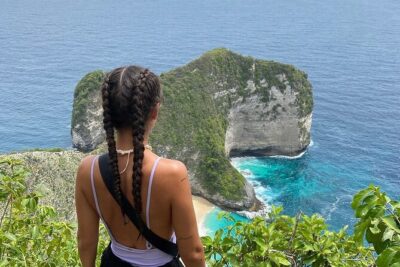
️Nusa Penida by Private Boat – Snorkeling 4 spots, Swim with Mantas + Land Tour
Read our review →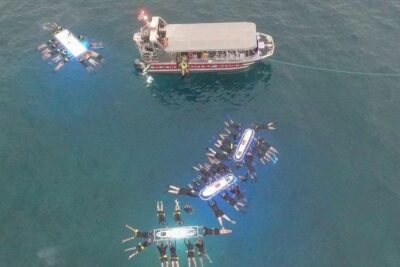
Kona Manta Ray Snorkel Tour in Keauhou Harbor
Read our review →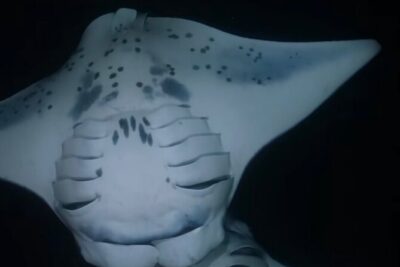
KONA Manta Ray Night Snorkel – FREE re-ride if no Sightings
Read our review →
Nusa Penida day trip: boat, 4 snorkeling, Manta rays & Land tour
Read our review →
Bali/Nusa Penida: Manta Point Snorkeling & West Coast Tour
Read our review →
Glow of the Deep: Night Snorkeling with Manta Rays
Read our review →Lists this trip appears in