
REVIEW · NIGHT SNORKELING TRIPS
Night Snorkeling Adventure
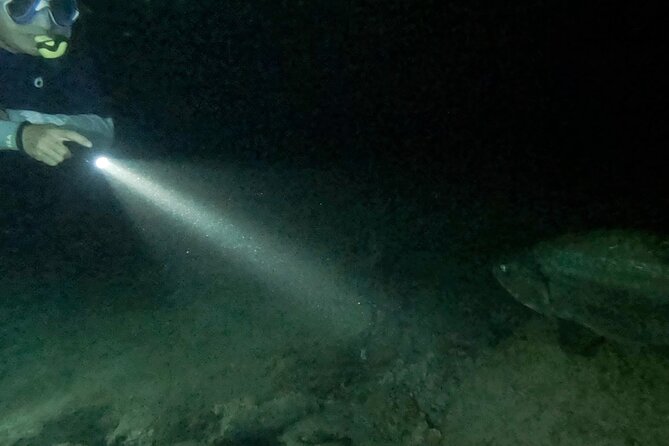
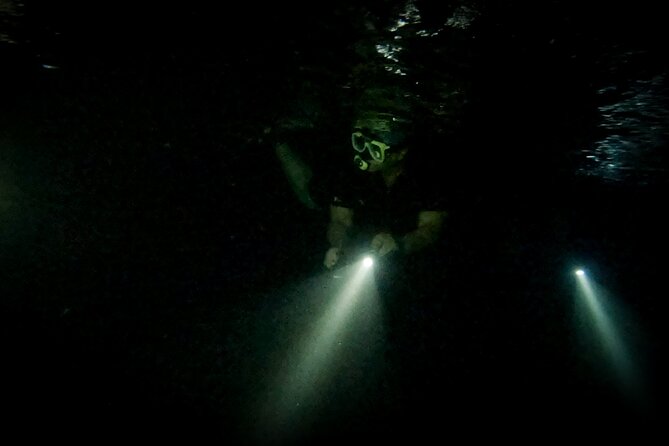
At night, Bonaire’s familiar reef changes character. Large tarpons may glide beside you, using your light to spot the small fish they hunt, while lobsters, octopus, eels, squid, and rays become easier to find. I like the close tarpon encounters and the chance to see animals that hide during daylight. The main drawback is simple: tarpons are wild, so you may not see them on every outing.
I also like that an experienced instructor stays with you for the entire water session and that the price includes the shorty wetsuit, booties, fins, mask, snorkel, and underwater light. The shore entry and two-hour format keep the evening manageable, though swimming after dark can feel challenging if you are new to snorkeling or uneasy in low light.
Key points to know before you book
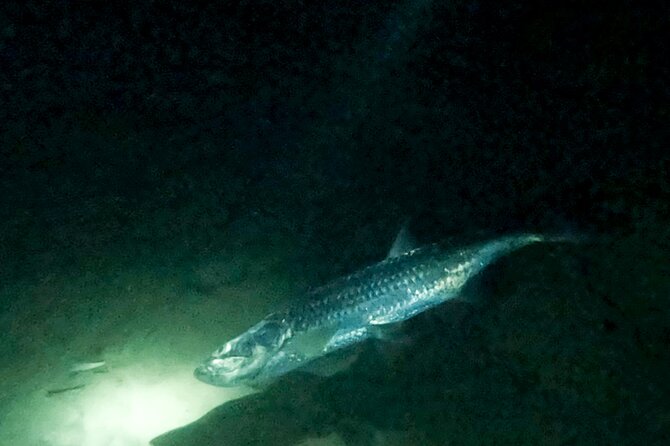
- Tarpons use your light: These large fish often follow snorkelers because the beam helps them find small prey.
- Night creatures take center stage: Look for lobsters, crabs, lionfish, eels, squid, stingrays, and octopus.
- The outing begins at 7 p.m.: You enter from shore, spend about two hours in the water, then return to the meeting point.
- All main equipment is supplied: The package includes a shorty wetsuit, booties, fins, mask, snorkel, and light.
- Small groups keep the outing personal: No more than 10 people can join, and a private outing can be requested.
- Plan for the nature fee: A STINAPA nature tag is required for most people using Bonaire’s national marine park, except cruise ship passengers.
Why Bonaire at night feels completely different
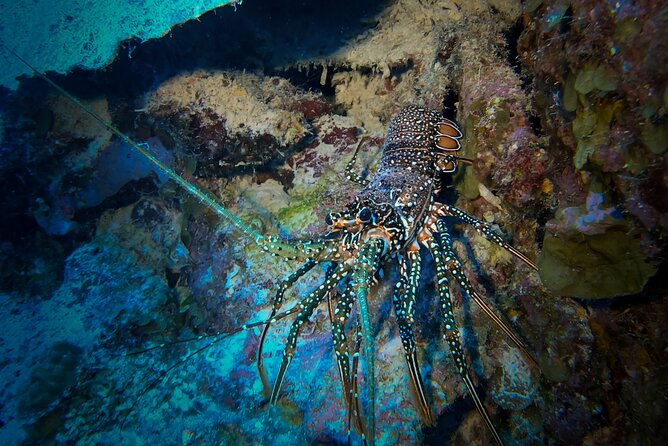
Daytime snorkeling shows you color, movement, and broad views of the reef. At night, your world shrinks to the circle of light in front of your mask. That smaller view makes each sighting feel more immediate. A lobster’s antennae appear first. An eel may reveal only its head. An octopus can seem to materialize from the reef and then vanish again.
That change is the real reason to book this activity. You are not simply repeating a daytime snorkel at a later hour. You are looking for animals with different habits and watching familiar water behave in a new way.
The tarpons add another layer. They have learned that snorkel and underwater lights can reveal small fish, so they may stay close to the group. Their size and smooth movement make them memorable, especially when one passes through the edge of your light beam. Still, their presence is not guaranteed. One outing recorded no tarpons, yet the snorkeling remained worthwhile because the night marine life and the guide made the experience enjoyable.
That is an important expectation to set. Book this for the whole night setting and the chance of tarpons, not as a guaranteed animal encounter.
More Night Snorkeling Trips in Bonaire:
- Sunset- night snorkel trip
★ 5.0 · 23 reviews - Bioluminescent Night Snorkeling
★ 4.5 · 12 reviews - Big Island Manta Ray Night Snorkel
★ 5.0 · 5,656 reviews
The 7 p.m. meeting and shore entry
The meeting point is 64 Kaya Gob. N. Debrot in Kralendijk. The listed start time is 7 p.m., and the activity ends back at the same place. Pickup is offered, and an air-conditioned vehicle is included, which helps if you are staying elsewhere on the island or would rather not arrange your own ride.
Once you meet the guide, you prepare for a shore entry. This keeps the outing direct and avoids a boat transfer, but it also means you should be comfortable walking into the water from land. The supplied booties help protect your feet, and the fins, mask, snorkel, shorty wetsuit, and light are included.
Bring your swimsuit and a towel. Neither is supplied. You should also take care of the STINAPA nature tag before arriving if it applies to you. The tag is required for people enjoying Bonaire’s national marine park, while cruise ship passengers are exempt according to the activity details.
The guide is an experienced instructor and stays with you throughout the water portion. That matters more at night than it does during an ordinary daytime swim. You can ask questions as you find animals, and you have someone nearby to explain what you are seeing and help you keep track of the group.
A two-hour search with a moving circle of light
The main portion of the evening is not a fast swim from one landmark to another. You move with the guide and use your light to search the water and reef for signs of activity. The pace allows you to stop when something interesting appears, listen to an explanation, and then continue looking.
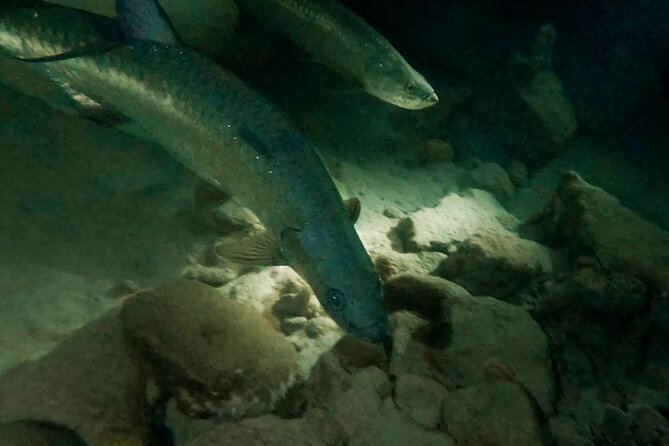
Your light becomes both a tool and a point of attention. It helps you find small animals, but it also draws the tarpons close because they use the illumination to hunt. You may see one large fish glide through the beam, or several tarpons remain nearby as the group searches.
The activity description lists a wide range of possible sightings: lobsters, crabs, lionfish, eels, squid, stingrays, and octopus. You might also see ordinary reef fish in a different setting. Some creatures are easier to notice at night because they are active or exposed after sunset.
The experience is strongest when you slow down. A night snorkel rewards patience more than speed. Keep your light steady, listen to the guide, and give yourself time to scan the edges of the beam. The guide can answer questions and share information about the marine life you encounter, so this is not just a swim with rented equipment.
The tarpon encounter, and why it is not guaranteed
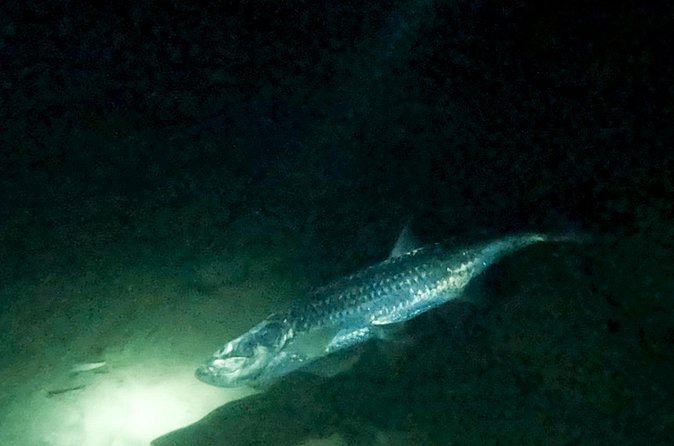
Tarpons are the signature attraction here. They are large, powerful fish, and watching them circle or pass close to a light creates the kind of moment you will remember long after the equipment is returned.
Their behavior is also what makes the outing unusual. The tarpons have learned to take advantage of lights used by snorkelers and divers, since those lights can expose small fish. You are not feeding them, calling them, or handling them. You are simply entering the water with a light source that may help them hunt.
That natural behavior is worth respecting. Keep your attention on the animal and follow the guide’s directions. The supplied information does not promise a set number of tarpons, and one outing had none. Conditions and animal behavior can change from night to night.
If tarpons do not appear, the trip still offers a proper nighttime marine-life search. Lobsters, eels, squid, rays, and octopus may provide the highlight instead. One especially memorable outing included an octopus, while another produced lobsters, eels, squid, and rays. The best attitude is to treat the tarpons as a major bonus within a larger night snorkeling experience.
A few more days in the water around Bonaire worth a look
- Double Dip Snorkel Trip
★ 5.0 · 1,305 reviews - Clearbottom Mangrove Kayak & Snorkel tour
★ 5.0 · 597 reviews - Klein Bonaire Marine Park Snorkeling Excursion
★ 5.0 · 343 reviews - Luxury snorkel trip on a spacious wooden schooner and local lunch
★ 5.0 · 284 reviews
What the other marine life adds
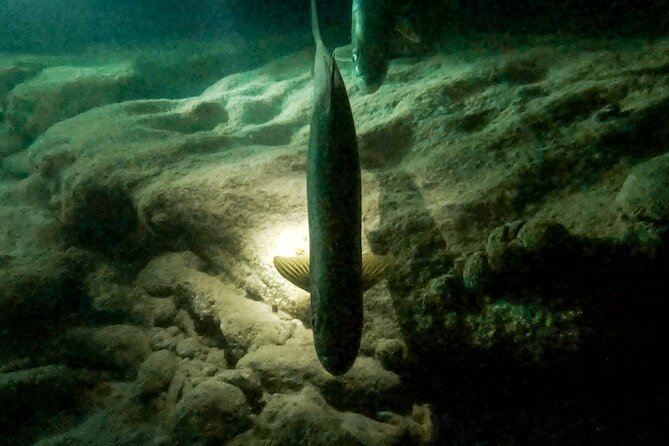
Lobsters are among the animals most likely to catch your attention. Their long feelers can extend into the edge of the light before you see the rest of the body, and large specimens can look surprisingly imposing at close range.
Eels and crabs offer a different kind of sighting. They may remain partly concealed, so the guide’s experience helps you notice details you could easily miss on your own. Lionfish also appear on the list of possible nocturnal animals, and you should observe them without touching them.
Squid, stingrays, and octopus make the outing less predictable. A squid can move through the light quickly, while a ray may appear along the bottom. An octopus is often the prize for careful searching because its shape and color can blend into the reef.
You should not expect every animal on the list in one night. These are possible sightings, not a fixed route or guarantee. That uncertainty is part of the appeal, but it also explains why the guide’s role matters. You are paying for access, equipment, instruction, and a structured search, not a staged animal show.
Equipment, comfort, and group size
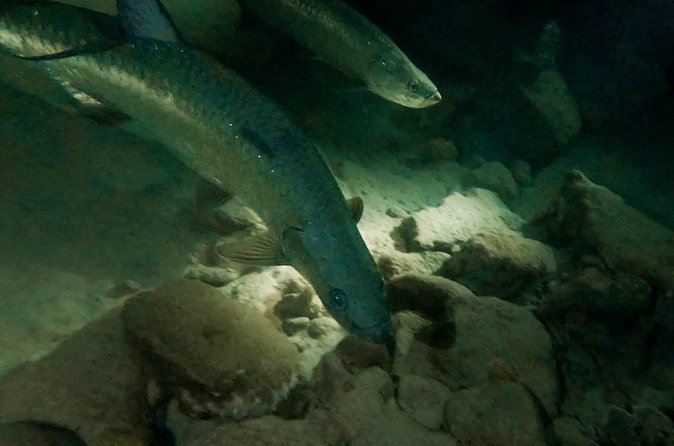
The $71.65 price includes the main snorkel equipment: a shorty wetsuit, booties, fins, mask, snorkel, and underwater light. That is a fair package for someone who does not want to pack or rent each item separately, especially since the light is essential to the activity.
The shorty wetsuit can also make the evening more comfortable in the water. The exact fit of any rental gear depends on availability and sizing, so arrive ready to tell the guide if a mask or fin needs adjustment. A good mask seal matters even more at night, when clearing equipment can interrupt your view and your sense of orientation.
The group maximum is 10 people, and smaller groups may join. You can request a completely private outing in your booking details. If privacy matters to you, make that request in advance rather than assuming the regular departure will be private.
A small group helps the guide answer questions and keeps the lights from becoming a confusing cluster. It also gives you more room to pay attention to the animals. Still, even a small group means you will share the water and the guide’s attention.
Who will get the most from this outing
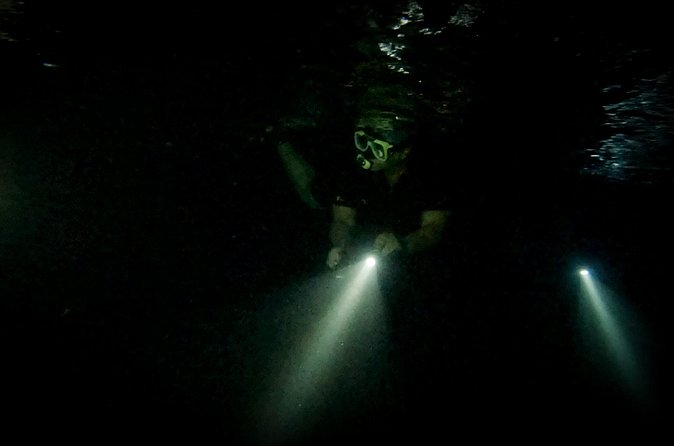
I would choose this for a confident snorkeler who has already enjoyed Bonaire by day and wants something genuinely different. It is also a strong pick for anyone interested in marine life and willing to trade broad daytime views for focused nighttime searching.
You do not need to be an expert. Most people can participate, and an experienced instructor remains with the group. But you should be comfortable entering the water from shore, using a mask and snorkel, and swimming in low light.
This may not be the best first-ever water activity for someone who feels nervous in the dark. The guide provides support, but the setting remains nighttime open water. If that sounds exciting rather than stressful, the unusual atmosphere is exactly what makes the experience memorable.
Families and mixed-ability groups should think about comfort levels carefully. The supplied information does not give a minimum age or specific accessibility details, so ask the provider before booking if you have questions about children, mobility, or special equipment needs.
Is $71.65 a good value?
At $71.65 per person, the price covers about two hours, an experienced instructor, a full set of equipment, an underwater light, and an air-conditioned vehicle. You are also paying for a planned night search with a small group rather than simply renting a mask and swimming alone.
The value is strongest if you need the equipment and want guidance. Buying or packing a shorty wetsuit, booties, fins, mask, snorkel, and a suitable light would add cost and effort. The guide’s help also has real value because finding small nocturnal animals takes more than pointing a flashlight at the reef.
The value is less certain if you already own all the equipment and prefer independent snorkeling. In that case, the main reason to book is the guide, the organized setting, and the chance to encounter tarpons close to the group.
The 4.8 rating from 18 ratings and 94 percent recommendation figure suggest that the experience has delivered well for most bookings. I would still read those numbers in context: animal sightings vary, and the evening with no tarpons was still considered worthwhile because the guide and night snorkeling carried the outing.
Timing, cancellation, and practical planning
The activity starts at 7 p.m. and lasts about two hours. That makes it easy to fit into an evening, but plan your dinner and transport around the return time rather than trying to squeeze in another fixed appointment immediately afterward.
Confirmation arrives at booking, and the activity accepts mobile tickets. Free cancellation is available up to 24 hours before the local start time for a full refund. Changes or cancellations inside that 24-hour window are not accepted and are not refunded.
The activity depends on good weather. If poor weather forces a cancellation, you can receive a different date or a full refund. A minimum number of participants is also required, and if that minimum is not met, you will be offered another date or activity, or receive a full refund.
Pack your swimsuit and towel, and arrange the STINAPA tag if required. The operator provides the rest of the core water gear. If you want a private outing, state that request when booking.
Should you book the Night Snorkeling Adventure?
Book it if you want to see Bonaire’s marine life after dark and like the idea of large tarpons using your light to hunt nearby. The combination of tarpons, lobsters, squid, rays, eels, and the possibility of an octopus makes this far more distinctive than a routine daytime snorkel.
Skip it if you need a guaranteed tarpon encounter, dislike night swimming, or prefer to explore without a guide. The tarpons are wild and may not appear, and the experience depends on your comfort with a shore entry and low-light swimming.
For most confident snorkelers, I think the $71.65 price is sensible because it includes the equipment, light, instructor, transport vehicle, and small-group format. Go with curiosity rather than a checklist. If the tarpons show up, they may steal the evening. If they do not, the nocturnal reef still gives you a very different side of Bonaire.
FAQ
Where does the Night Snorkeling Adventure begin?
It begins at 64 Kaya Gob. N. Debrot in Kralendijk, Caribbean Netherlands.
What time does the activity start?
The listed start time is 7 p.m.
How long does the night snorkel last?
The activity lasts approximately two hours.
Is pickup available?
Yes. Pickup is offered, and an air-conditioned vehicle is included.
What equipment is included?
The package includes a shorty wetsuit, booties, fins, mask, snorkel, and underwater light.
What should I bring?
Bring your own swimsuit and towel. These are not included.
Do I need a STINAPA nature tag?
Yes, a STINAPA nature tag is required for people enjoying the national marine park. Cruise ship passengers are listed as exempt.
Can I request a private outing?
Yes. You can request a completely private experience in the booking details. Otherwise, other people may join, although groups are kept small and the maximum is 10 participants.
Just added around Bonaire
- Sunset- night snorkel trip★ 5.0 · 23 reviews
- Swim & Reef Snorkeling Bonaire★ 5.0 · 13 reviews
- 100% Private Charter Snorkel, Sail, Relax (Cruisers Friendly)★ 5.0 · 115 reviews
- E-Snorkeling tour in Bonaire with easy Sea Scooters★ 5.0 · 82 reviews
- Snorkel with Turtles & see the Flamingos★ 4.5 · 41 reviews
- Bioluminescent Night Snorkeling★ 4.5 · 12 reviews
- Catamaran Snorkel & BBQ Sail (cruise friendly)★ 5.0 · 196 reviews
- Private Sunset Dinner Cruise in Bonaire w/ Sailing & Snorkeling★ 5.0 · 15 reviews
Night Snorkeling Trips, compared.
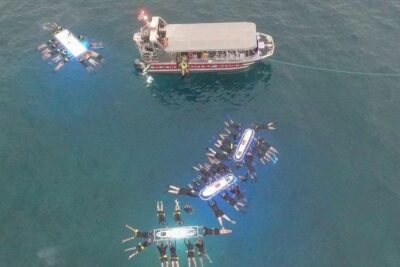
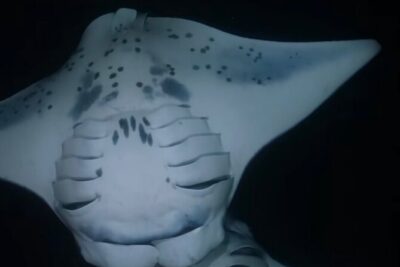
KONA Manta Ray Night Snorkel – FREE re-ride if no Sightings
Read our review →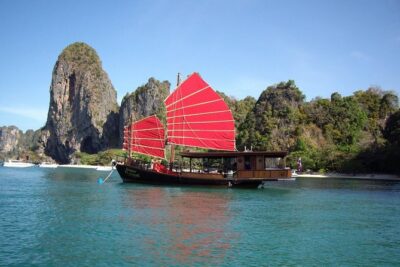
Krabi 4 Island Sunset Snorkeling Cruise + Bioluminescent Swim
Read our review →
Glow of the Deep: Night Snorkeling with Manta Rays
Read our review →
Manta Magic: Small-Group Manta Ray Night Snorkel in Kailua Kona
Read our review →
Bioluminescent Plankton, Snorkeling & Sunset Tour
Read our review →Lists this trip appears in